10+
Consultants
50+
Rehab Experts
30000+
Happy Customers
Take the First Step Towards a Better Life with Paralysis Rehabilitation. Unlock your full potential, regain control, strength, and independence, and improve your quality of life with our comprehensive, personalized, outcome-based paralysis rehabilitation plan.
At our paralysis rehabilitation center, we strive to empower individuals with various types of paralysis to regain mobility and confidence through multidisciplinary, comprehensive, evidence-based rehabilitation programs. Our expert team of therapists, doctors, and rehab specialists is committed to providing the best care tailored to each patient’s unique needs and goals.
With a focus on setting achievable goals and overcoming challenges, our patients experience lasting benefits through an evidence-based, patient-centered approach.
Service aspects
- Tailored Rehab Plans: Patient-specific, evidence-based therapies.
- Multidisciplinary team:: Doctors, nurses, caregivers, dietitians included.
- Expert Therapists: Certified professionals addressing patient needs.
- Modern Technology: High-tech facilities for best outcomes.
- Holistic Care: Includes all paralysis rehab aspects.
- Emotional Support: Counselling provided.
- Consistent Care: Physician-guided plans with ongoing monitoring.
- Neuromuscular Training: Custom mobility training.
- Community Activities: Yoga and pranayama included.
- Family Participation: Encouraged for lasting success.
Our primary aim is to help individuals with paralysis regain control, achieve their full potential, and enjoy an improved quality of life in a supportive and caring environment.
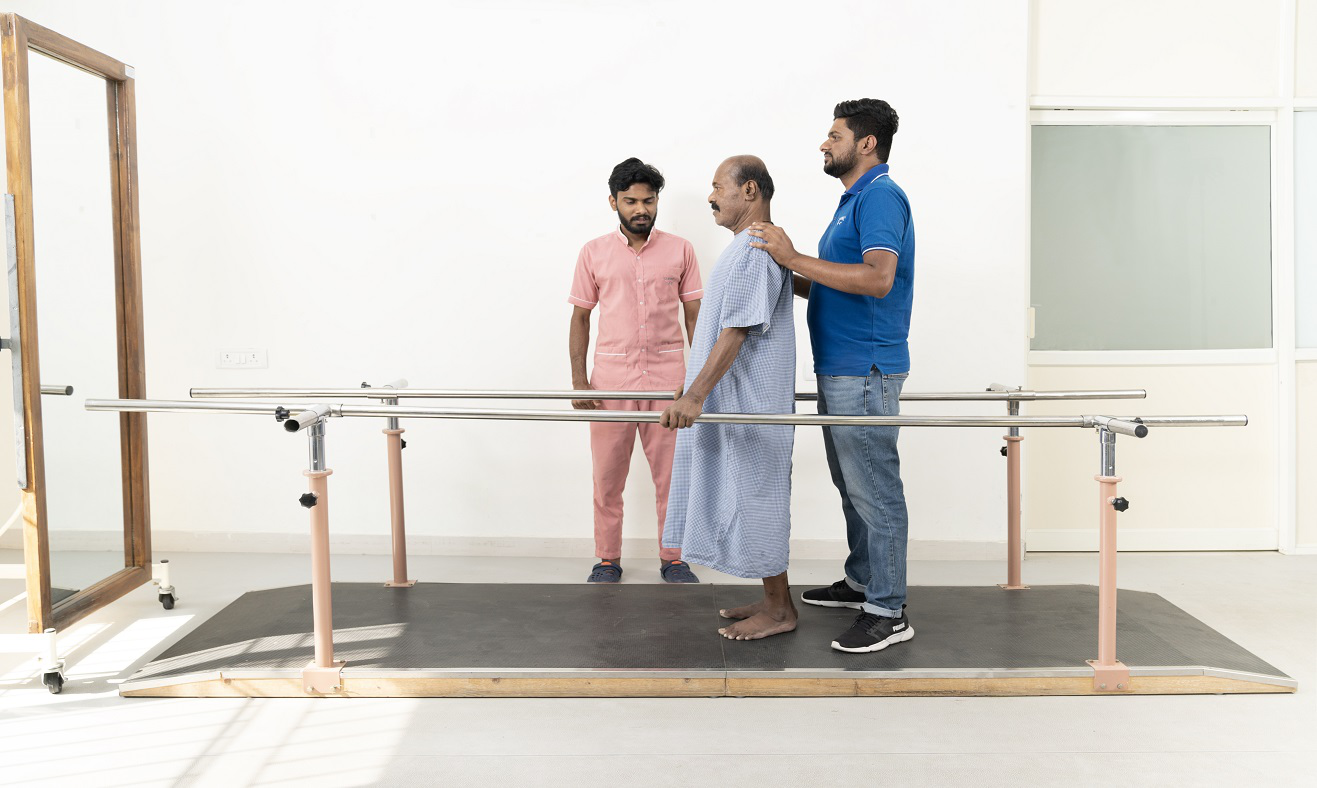
Top Challenges Faced by Individuals Living with Paralysis
- Pain Management: Dealing with nerve-induced pain.
- Blood Clots: Addressing slow or blocked blood flow.
- Urinary Incontinence: Managing bladder control.
- Respiratory Issues: Handling reduced lung capacity.
- Sepsis: Treating organ-damaging infections.
- Spasticity: Addressing mobility issues.
- Speech/Cognitive Issues: Handling nerve/muscle injury impacts.
- Emotional Trauma: Support for acceptance and adjustment.
- Lifestyle Changes: Facilitating new coping mechanisms.
- Complex Conditions: Managing inactivity-induced pressure sores.
Top 10 Benefits of Our Paralysis Rehabilitation Program
- Independence: Promotes self-sufficiency.
- Cognitive Function: Addresses cognitive issues.
- Communication: Facilitates community participation.
- Mobility: Boosts physical strength.
- Self-confidence: Enhances emotional resilience.
- Risk Reduction: Prevents complications.
- Care Continuity: Ensures ongoing progress.
- Social Reintegration: Aids community transition.
- Lasting Benefits: Advanced technologies for maximum recovery.
- Muscle Health: Regular exercise prevents atrophy.
Our paralysis rehabilitation program is designed to assist Our expert team of therapists and specialists work closely with patients and their primary consultants to develop a unique approach tailored to their specific needs, enabling them to overcome challenges and achieve their rehabilitation goals.
Why opt for Sukino’s paralysis rehabilitation facility
- Thorough Evaluation: Addresses all patient needs.
- Personalized Programs: Designed for individual conditions/goals.
- Advanced Tech: Uses evidence-based methods.
- All-inclusive Care: Covers all rehab aspects.
- Round-the-Clock Nursing: Ensures efficient recovery.
- Multidisciplinary Team: Includes various therapists.
- Broad Experience: In treating different paralysis types.
- Professional Development: Keeps up with latest research.
- Compassionate Care: Supportive environment/resources.
- Comfortable Facilities: Homelike and accessible.
Sukino addresses paralysis challenges through a comprehensive, patient-centered approach, advanced techniques, and personalized plans, helping patients regain independence. Seeking professional support for paralysis rehabilitation? Ready for improved mobility? Take the first step towards regaining your independence. Contact us today.
Clients Testimonials
-
 Harika Menon02 May 2023I cannot express my gratitude enough for the outstanding care and rehabilitation services provided by Sukino for my father's paralysis recovery...
 -
 Arun Ajay04 May 2023Sukino is a true beacon of hope for anyone in need of paralysis rehabilitation. When my mother suffered a stroke and was left partially paralyzed,...
 -
 Dikshit Hari29 Apr 2023Sukino's paralysis rehabilitation program has facilitated a remarkable transformation in my mother's life. When she suffered a spinal cord injury,...
 -
 Sahana R06 May 2023Sukino's approach to paralysis rehabilitation is nothing short of excellence. My father's experience with their program has been life-changing...
FAQ
It's a therapeutic process that aims to help individuals with paralysis regain physical, emotional, and cognitive function, promoting independence and quality of life.
Coverage varies depending on your insurance plan. Consult your insurance provider to understand the extent of coverage for rehabilitation services.
The duration varies widely depending on the severity of the paralysis, the patient's overall health, and their progress in therapy, and personal goals. It can range from months to years.
Yes, assistive technology such as mobility aids, communication devices, and adaptive equipment can support independence, mobility, and communication during rehabilitation.
Family involvement is often crucial for motivation, emotional support, and assistance with exercises and therapies at home.
Patients often need to relearn daily tasks, adopt new coping strategies, and modify their living spaces for accessibility.
A dietitian ensures patients receive proper nutrition to support healing, maintain strength, and prevent pressure sores.
Pain is managed through a combination of medications, therapies, and sometimes, interventions like nerve blocks or stimulators.
Family involvement is crucial, as they provide emotional support, encouragement, and assistance in implementing therapeutic strategies at home for lasting success. Family involvement provides emotional support, encouragement, and practical assistance, fostering a supportive environment and aiding in long-term success.
Neuromuscular re-education uses exercises and techniques to restore normal movement, improve balance, and increase muscle strength and coordination. Neuromuscular re-education involves techniques to restore normal movement, balance, and coordination, often through exercises targeting specific muscles or muscle groups.
Rehabilitation cannot reverse paralysis but can help maximize remaining abilities and function, improve independence, and enhance quality of life.
Consult with your healthcare provider, research local facilities, and consider factors such as staff expertise, therapy options, and facility accessibility.
Urinary incontinence is a lack of bladder control. It's managed involve a combination of medications, pelvic floor exercises, bladder training, and sometimes, catheterization.
Emotional support is provided through counseling and psychological therapies, aiding in acceptance, seeking help, and adjustment.